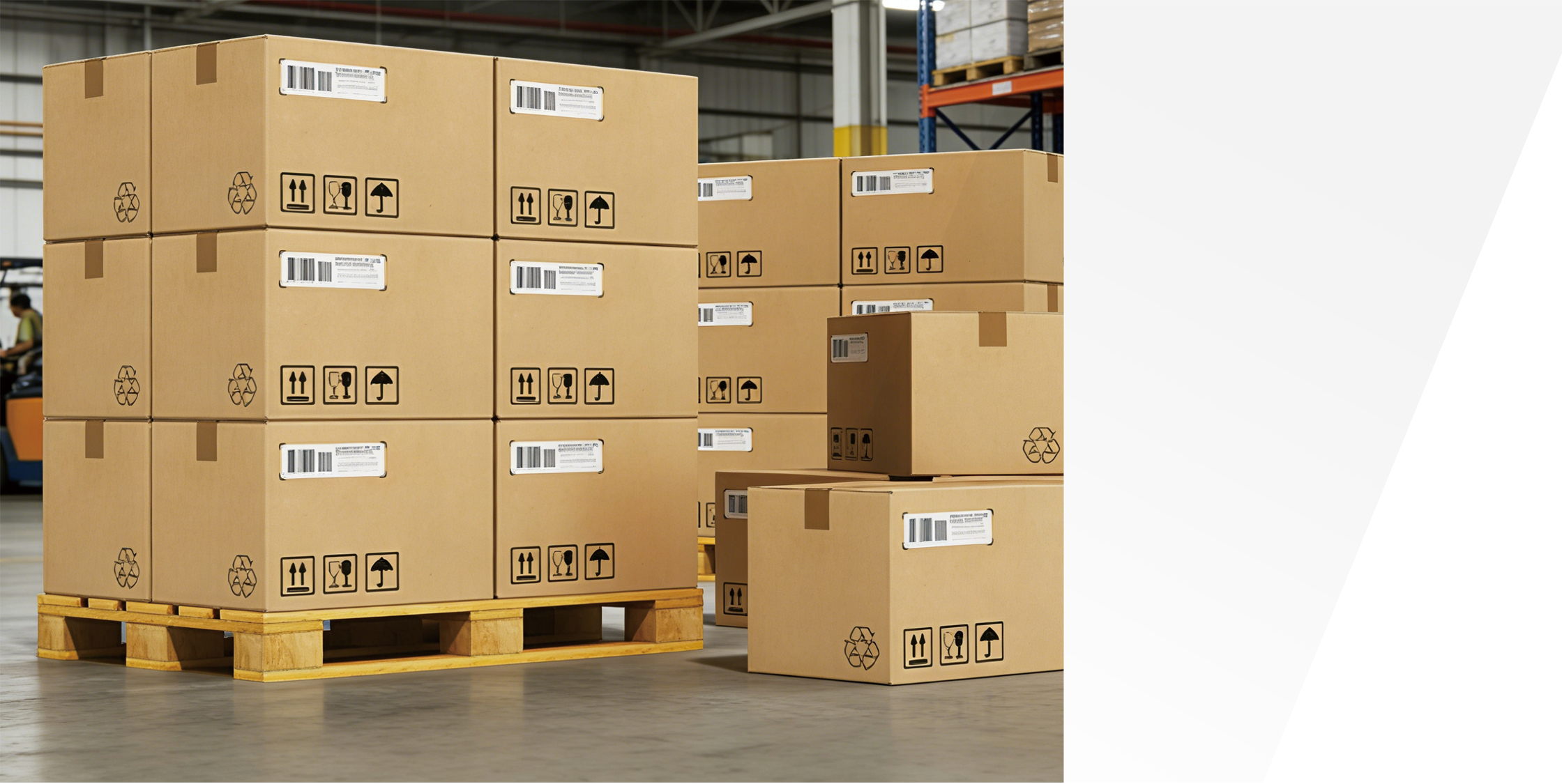
Palletizing Systems & Robotic Palletizers

Palletizing Systems & Robotic Palletizers

A palletizing system is the end-of-line stage that stacks cartons, cases and bags onto pallets automatically, replacing manual lifting with a conventional or robotic palletizer. CASEPACKERPRO builds both types, with robotic units offering flexible multi-pattern stacking and conventional units suited to standardized high-volume lines, and both integrated with upstream case packing machines and downstream pallet wrapping equipment.
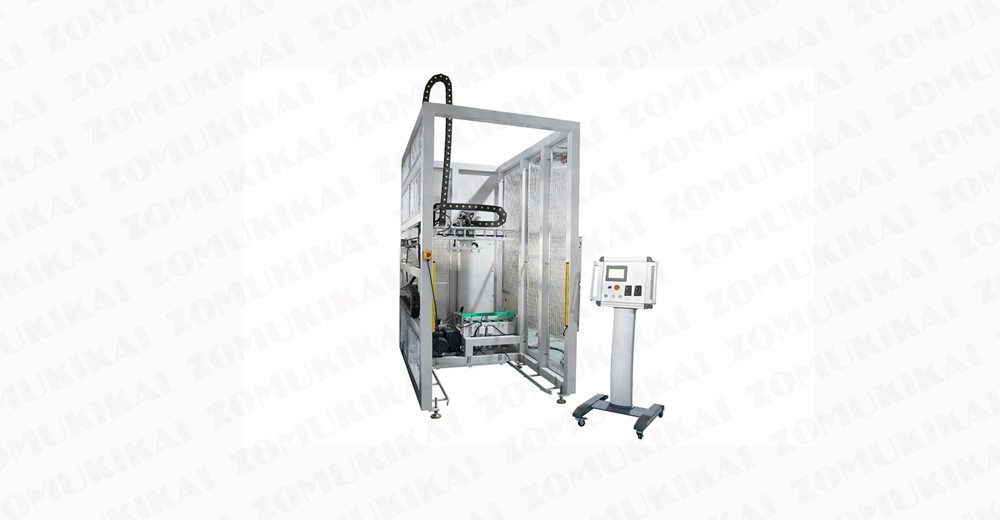
ZOMUKIKAI ZC-P1200 Linear Arm Palletizer automatically palletizing corrugated cartons and cases

Applicable For:

Food & Beverage

  • corrugated cartons
  • beverage cases

Daily Consumer Goods

  • detergent cartons
  • tissue paper cases

More details on product page

Linear Arm Palletizer Machine

The ZC-P1200 linear arm palletizer is an automatic end-of-line machine that moves finished cartons, corrugated cases, trays and bundles from the conveyor onto pallets in predefined patterns. It runs on a servo motor-driven synchronous belt transmission, uses 4 kW of power and 100 L/min of air, and handles up to 8 cycles per minute depending on the packing actions upstream. The compact linear arm layout suits food, beverage, pharmaceutical, household chemical and daily consumer goods lines where floor space is limited and stacking consistency matters.
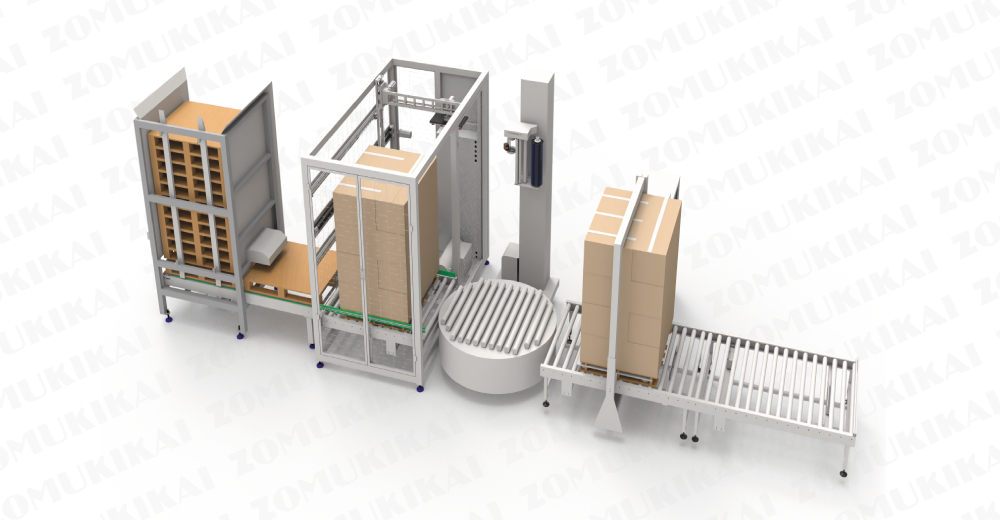
ZOMUKIKAI ZC Series Pallet Feeding Palletizing and Strapping Line showing pallet feeding, mechanical palletizing, wrapping and strapping stages

Applicable For:

Carton, box and folding box packaging

  • medicine cartons
  • cosmetic boxes

Tissue and paper product packing

  • facial tissue packs
  • napkins

More details on product page

Pallet Feeding Palletizing and Strapping Line

The CASEPACKERPRO ZC Series Pallet Feeding Palletizing and Strapping Line is a fully automated end-of-line solution that integrates pallet supply, mechanical palletizing, stretch wrapping and pallet strapping in one continuous system. Designed for carton boxes, cases and packaged goods, it streamlines warehouse logistics while improving efficiency and load stability.
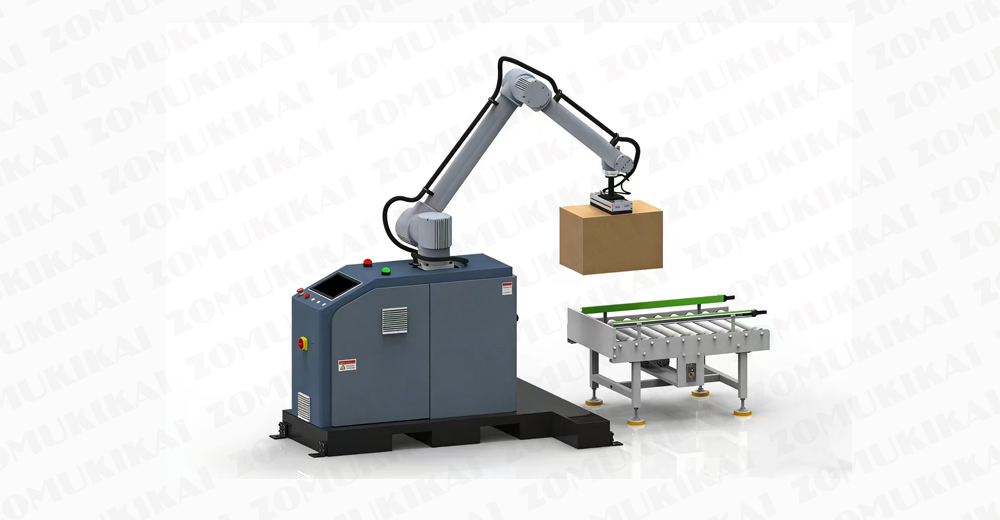
ZOMUKIKAI ZC-P1800 Cobot Palletizer collaborative robot arm palletizing cartons

Cobot Palletizer Machine

The ZC-P1800 Cobot Palletizer is a flexible collaborative robot palletizing solution designed for modern end-of-line packaging automation. Equipped with intelligent torque sensing technology and multi-level collision detection, it enables safe human-machine collaboration without the need for safety fencing. The compact design, easy programming and flexible palletizing recipes make it suitable for various carton, case and packaged product applications.
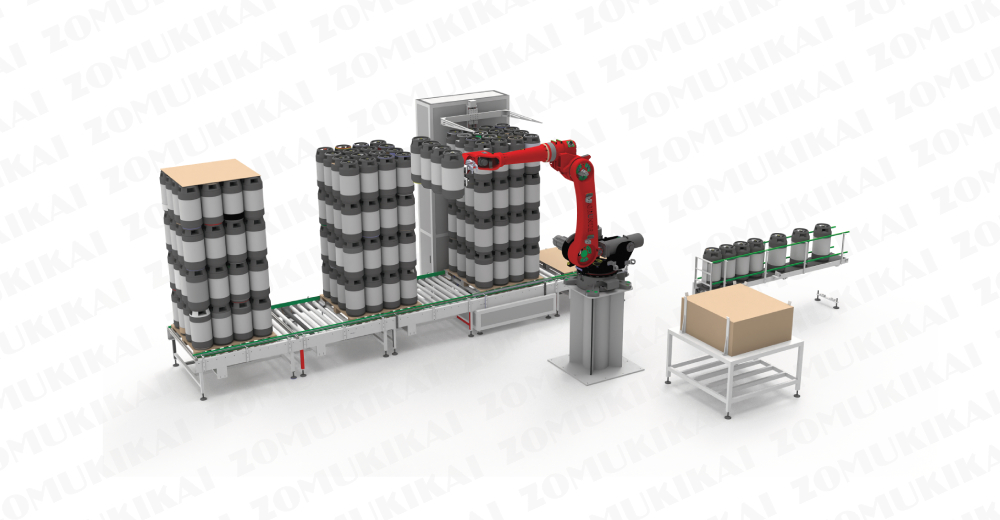
ZOMUKIKAI ZC Series Drum Robotic Palletizing System stacking industrial drums onto pallets with robotic arm, pad feeding and wrapping

Applicable For:

Carton, box and folding box packaging

  • medicine cartons
  • cosmetic boxes

Tissue and paper product packing

  • facial tissue packs
  • napkins

More details on product page

Drum Robotic Palletizing System

The CASEPACKERPRO ZC Series Drum Robotic Palletizing System delivers fully automated drum handling, palletizing, pad feeding and wrapping in one integrated solution. Engineered for heavy-duty industrial use, it ensures safe, efficient stacking of industrial drums, seamlessly integrating into end-of-line packaging and logistics lines.

What a palletizing system does in the line

Palletizing is the point where packed products leave the packaging line as a stable, transportable load. The system receives cartons, cases or bags from the upstream conveyor, arranges them layer by layer according to a stacking pattern, and places them on the pallet. Because the load is built automatically, the work no longer depends on an operator lifting cases or bags at the end of the shift.

Two machine families cover this task. Conventional palletizers use a mechanical structure and are suited to standardized high-volume production lines with stable operation and efficient throughput. Robotic palletizers use a robot arm and offer flexible multi-pattern stacking, so pallet layouts, product sizes and production requirements can change without rebuilding the machine.

Robotic palletizer for packaging lines

A robotic palletizer picks each carton, case or bag and places it directly on the pallet or on a layer being formed. Pattern changes are handled through the stacking program rather than mechanical adjustment, which is why robotic units are chosen where several pack sizes or pallet layouts run on the same line. The same flexibility supports multi-pattern stacking for mixed production schedules.

Conventional palletizers for high-volume lines

Where the product mix is stable and the line runs at volume, a conventional palletizer keeps the stacking sequence mechanical and repeatable. It is the straightforward choice for standardized production, with efficient throughput and a layout that fits a fixed end-of-line position.

Products and packaging handled

  • Cartons and cases from case packing machines
  • Bags and other packaged products arriving on the end-of-line conveyor

Stacking accuracy and stability depend on the incoming package being square and consistently filled, so the case packing stage upstream matters as much as the palletizer itself.

End-of-line automation around the palletizer

The palletizing system is rarely a stand-alone unit. Integrated with upstream case packing machines and downstream pallet wrapping equipment, it forms a complete end-of-line automation solution: cases are packed, stacked onto the pallet, and the finished load is wrapped for transport. The modular layout design supports different conveyor configurations and production line speeds, so the system can be matched to the space and output of an existing line.

How to choose a palletizing system

  1. Define the products to be stacked: cartons, cases or bags, and how many formats the line runs.
  2. Decide whether the product mix is fixed (conventional palletizer) or changes often (robotic palletizer with multi-pattern stacking).
  3. Map the conveyor route from the case packing machine to the pallet position and onward to the pallet wrapping unit.
  4. Plan maintenance access and the modular layout around the available floor space.

Layout, conveyor configuration and line speed are defined per project with our engineers, based on the products and the upstream and downstream equipment.

Maintenance and continuous operation

Both palletizer types are built for continuous production environments, with low maintenance requirements and long-term operational stability as design goals. Because the stacking motion is repeatable, wear and adjustment points are predictable and can be scheduled into normal line maintenance.