ATEX Case Packing Machine: Explosion Proof Meaning and Working Principle
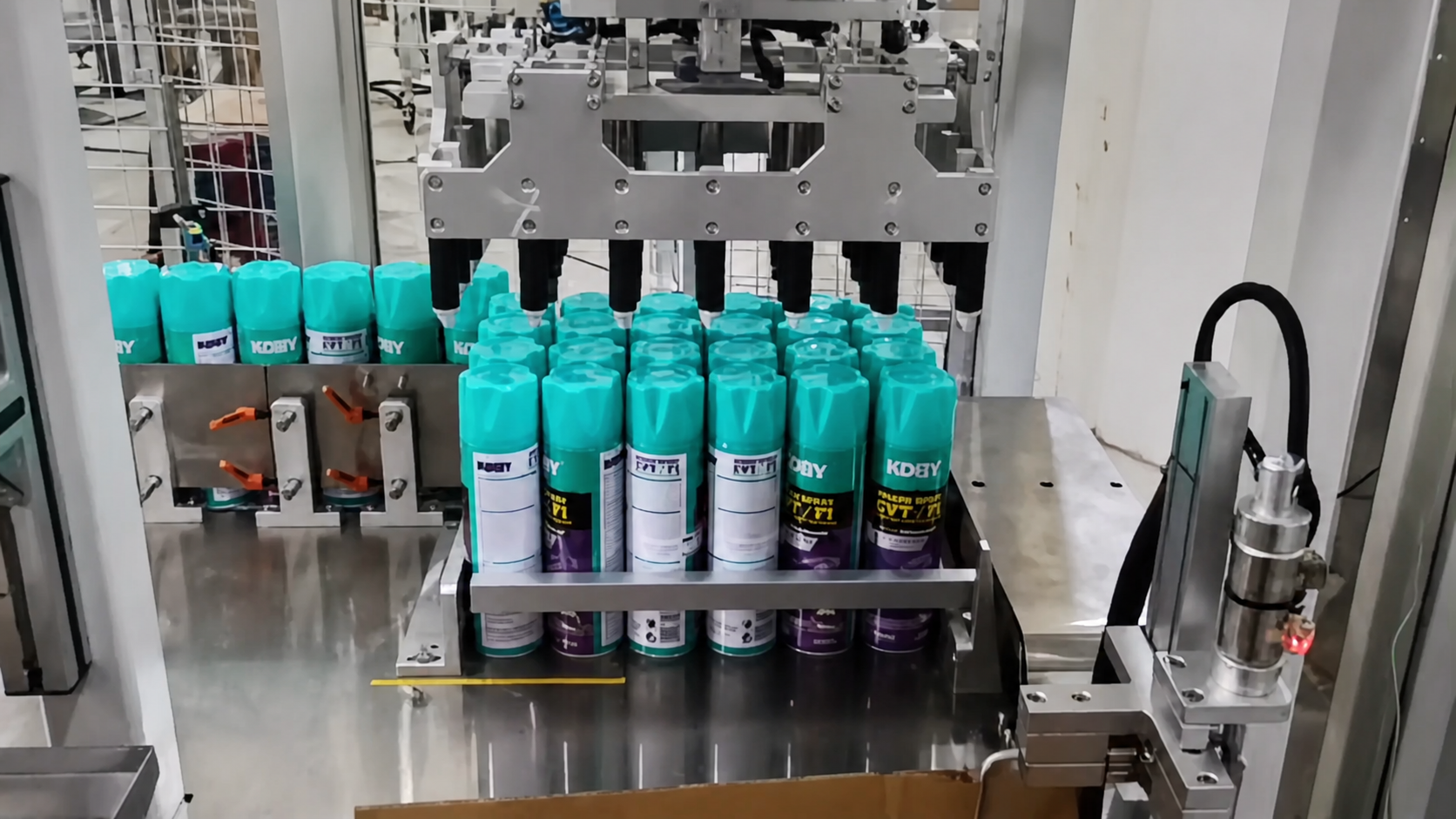
What an ATEX case packing machine is
An ATEX case packing machine is a case packer whose design and components are chosen so the machine can run in an area where an explosive atmosphere may form. The ATEX marking is a European framework for equipment used in such areas; the exact zone and category a machine is built for is agreed per project, because it depends on the product, the solvent or propellant involved and the site assessment. On the ZC-EP500 the ATEX explosion proof standard is stated as customizable, which means the enclosure and electrical specification are matched to the zone you declare rather than fixed in advance.
This is different from a standard case packer, where the question of ignition sources is not part of the machine design. The atex case packing machine page covers the ZC-EP500 build in detail; this article explains the concepts behind it.
Explosion proof packaging machine meaning in practice
Explosion proof does not mean the machine is immune to fire. It means ignition sources are controlled: electrical parts sit in sealed enclosures, heat-generating components are separated from the hazardous area, and the structure is fully enclosed so that anything occurring inside stays inside. The ZC-EP500 is described as a fully enclosed explosion-proof structure for this reason.
Three questions decide the specification of any hazardous environment case packer solution:
- What is the hazard? A propellant gas released from a damaged aerosol can behaves differently from a cloud of fine chemical powder. Gas and dust call for different enclosure and surface-temperature decisions.
- Where is the machine? The zone classification of the room, and how close the packing station sits to filling and storage, set the requirement.
- What is the ignition risk from the process itself? Metal-to-metal contact, static build-up on plastic containers and dust accumulation all matter as much as the electrical cabinet.
How an aerosol case packer works
An aerosol case packer receives filled and pressurized cans, groups them, places them into an erected corrugated case and seals it. On the ZC-EP500 the sequence is case erecting, product infeed, case sealing and safety monitoring. The safety monitoring is part of the working principle rather than an add-on: the machine watches its own condition and responds when something falls outside the set range.
Handling is the part that differs most from packing inert goods. Aerosol cans are pressurized, so a can that is dropped, crushed or scraped against a guide is not only a damaged product but a release of propellant inside the enclosure. Infeed therefore has to be gentle and consistent, and the case has to hold the cans upright and separated through sealing. Pressurized containers and powder products follow the same logic, with dust containment added for powders.
Products and the challenges they bring
The ZC-EP500 is applied to aerosol cans, pressurized containers and powder products. Each brings its own difficulty:
- Aerosol cans — the propellant is the hazard; the valve and dome are the fragile points, so contact pressure during grouping and loading has to be controlled.
- Pressurized containers — the same release risk, often with a container shape that is less stable to stand and group than a plain can.
- Powder products — fine powder becomes airborne during handling and settles on surfaces, where it both creates a dust hazard and affects sensors and moving parts. Dust proof packaging machine design and housekeeping routines matter as much as the enclosure.
What to prepare before specifying a machine
Because the ATEX standard on the ZC-EP500 is customizable, the specification conversation needs information from your side before a configuration can be fixed:
- The product and its propellant or solvent, with safety data.
- The zone classification of the packing area, from your site assessment.
- Container dimensions and the case size and board grade you use.
- The upstream filling and downstream conveying or palletizing equipment the packer must connect to.
- Site conditions: available space, air supply and how the line is cleaned between batches.
CASEPACKERPRO engineers prepare the layout drawing and machine configuration from this information. Where the zone classification or the applicable standard is not yet settled, it is defined per project with our engineers rather than assumed.
Where the machine sits in the line
An ATEX case packer is normally the end-of-line step after filling and capping, and it connects to conveying before and after. Integration is a safety question as much as a mechanical one: a transfer point where cans queue under pressure, or a conveyor that carries dust into the enclosure, can undermine an otherwise correct installation. The interfaces are therefore part of the configuration, not an afterthought.