Bag-in-Box Packaging Machine ZC-SL550
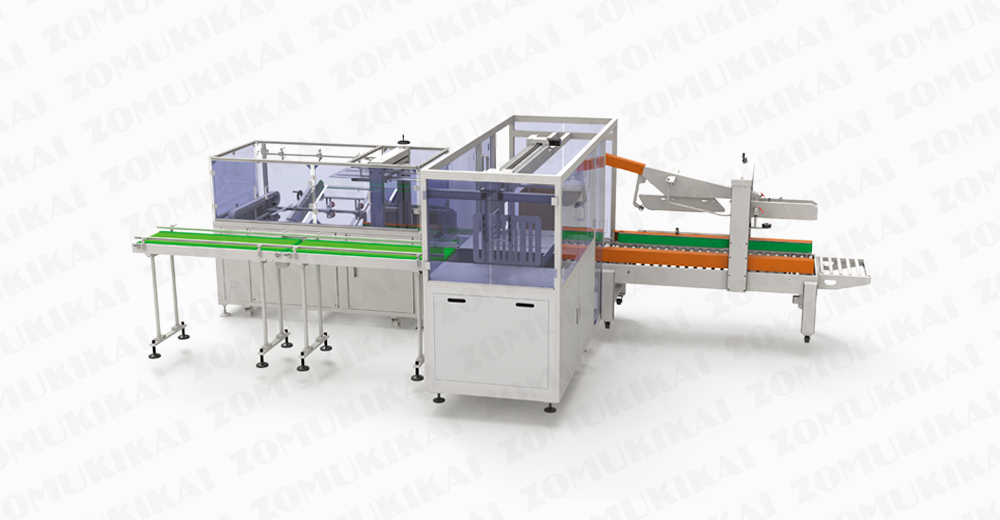
How the ZC-SL550 Loads Bags into Cases
Applications
Bagged Products
gusset bags
pillow bags
flexible pouches
snack bags
Food Products
frozen food packs
bakery products
prepared food pouches
Disposable & Household Products
plastic trays
paper cups
packaging kits
Specifications
| ZC Model | ZC-SL550 |
|---|---|
| Machine Type | Bag-in-Box Side Load Case Packer |
| Capacity | Up to 8 cases/min |
| Applicable Corrugated Carton Size | (300–550) × (200–400) × (200–400) mm |
| Power | 3.5 kW |
| Air Consumption | 6 m³/hour |
| Main Materials | Carbon steel + 304 stainless steel |
Sample Testing Service
Test your Bag-in-Box Packaging Machine ZC-SL550 and cartons to find the best packing method and avoid errors.
We can also source suitable cartons locally in China to save shipping cost.
Customer Service
We provide attentive, customized solutions at every stage: pre-sales, in-sales, and after-sales.
24/7 online support and training are available in over 30 countries to keep your production efficient.
Overview
When the ZC-SL550 is the right case packer
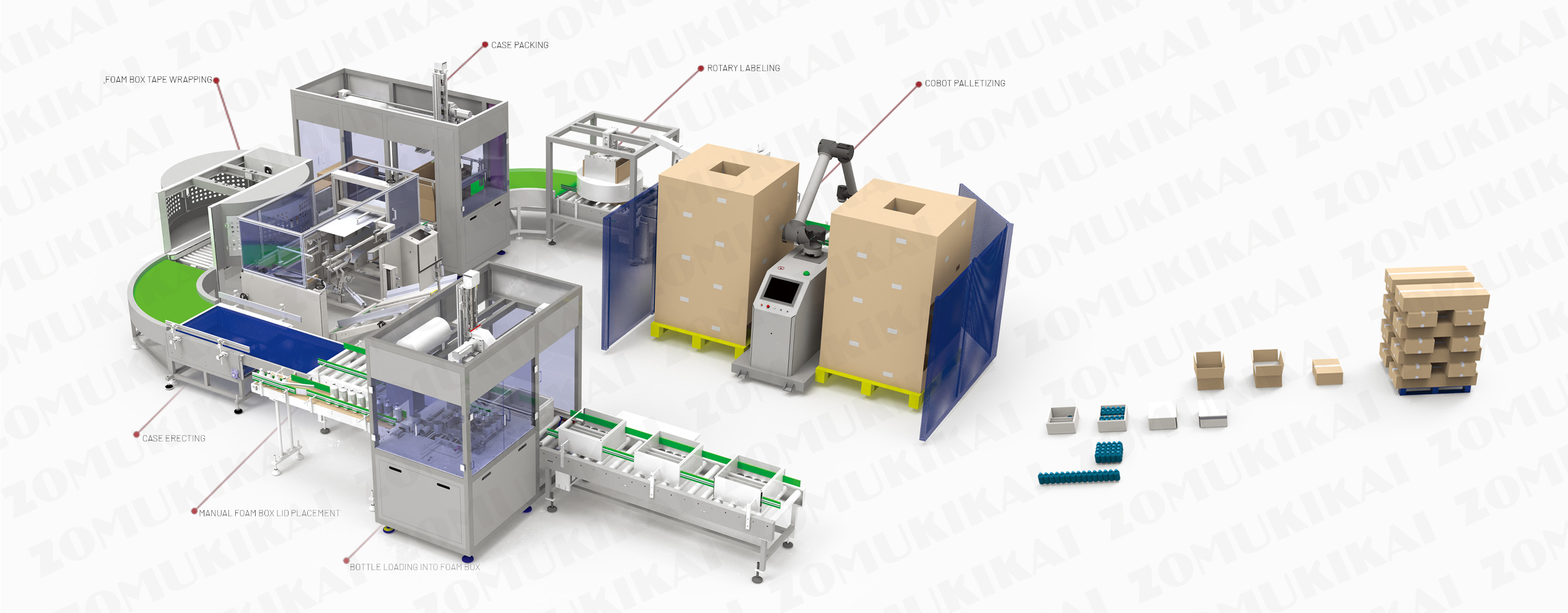
The ZC-SL550 is the side load model in the ZC case packing range. Choose it when the product will not hold its shape in a free fall: gusset bags, pillow bags, flexible pouches and snack bags that slump when dropped, and trays, paper cups and packaging kits that land out of pattern. The machine separates three jobs that a top-drop case packer does in one motion — shaping the group, buffering it, and loading the carton — so each group is square and settled before the side push moves it into the case.
If the product is a rigid, regular carton or a hard container that falls cleanly, a drop-type case packer is the simpler match. The ZC-SL550 is also not intended for oversize heavy goods, leak-prone liquid sachets without outer reinforcement, or products that need fully sealed vacuum protection.
Carton range and what it means for the packing pattern
The carton window is (300–550) × (200–400) × (200–400) mm. The 550 mm figure is the length the side push works across, so the longest case in the range sets the push stroke; the 200–400 mm width and height define how many rows and layers of product a group can carry. Because the group is built to the carton's cross-section before pushing, the packing pattern (rows × columns × layers) is agreed per product and carton rather than fixed by the machine.
Configuration for soft and mixed products
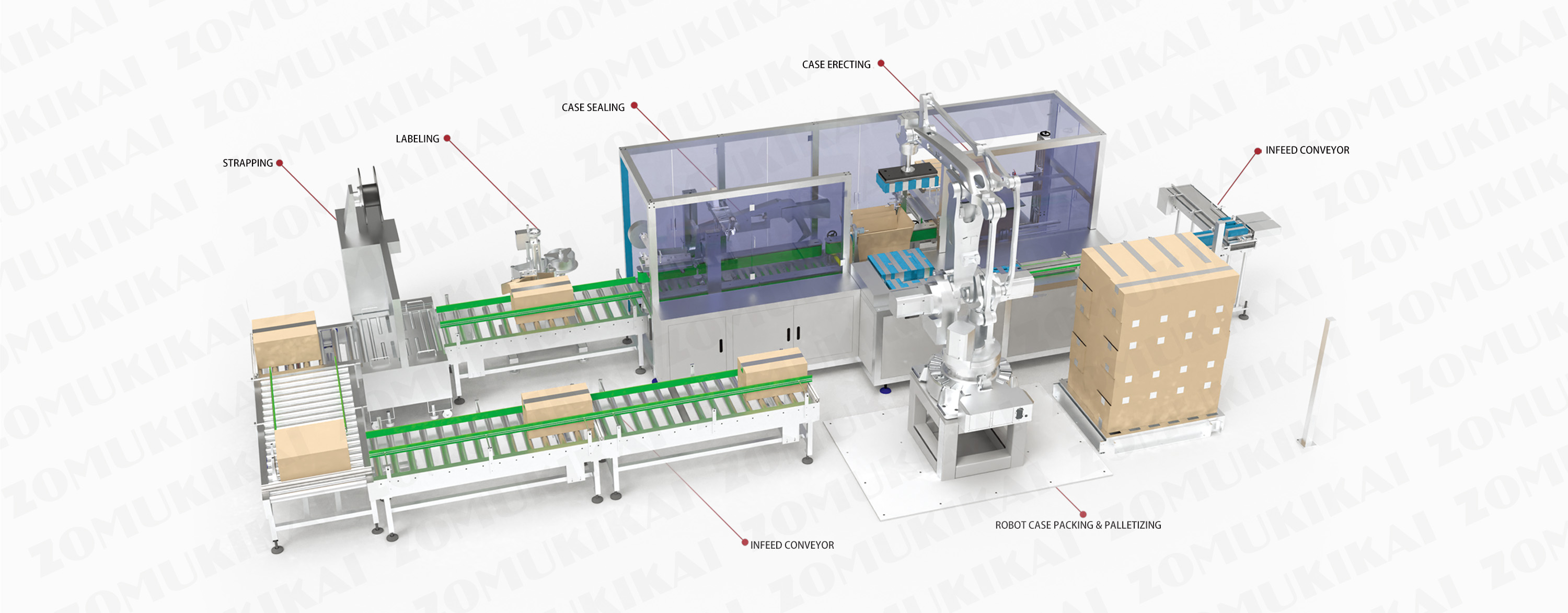
Beyond the standard case erecting, drop stacking, side push and case sealing sequence, the ZC-SL550 is configured around the product it handles:
- Product conditioning before stacking — where bags need to settle flat, the buffer area and stacking height are set to the bag's filled thickness.
- Push plate and speed — the side push is set to the softness of the pack so that bags are neither displaced by a slow push nor marked by a fast one.
- Upstream feeding — the machine can be fed by conveyor from an upstream bagger or by manual loading, depending on the line.
- Line signals — the case packer is specified to exchange run and stop signals with the equipment before and after it.
Dosing, filling and pouch forming are not part of this machine; they belong to the upstream premade pouch machine or bagger. Details of the shared platform, model comparison, standard configuration and after-sales terms are set out in the premade pouch machine selection guide.
Products and packs this model is built for
The ZC-SL550 handles bagged products — gusset bags, pillow bags, flexible pouches and snack bags — as well as food packs such as frozen food packs, bakery products and prepared food pouches, and disposable and household items such as plastic trays, paper cups and packaging kits. What these have in common is a pack that changes shape under its own weight, which is exactly the case where controlled stacking and a horizontal side push keep the carton load consistent.
Line integration
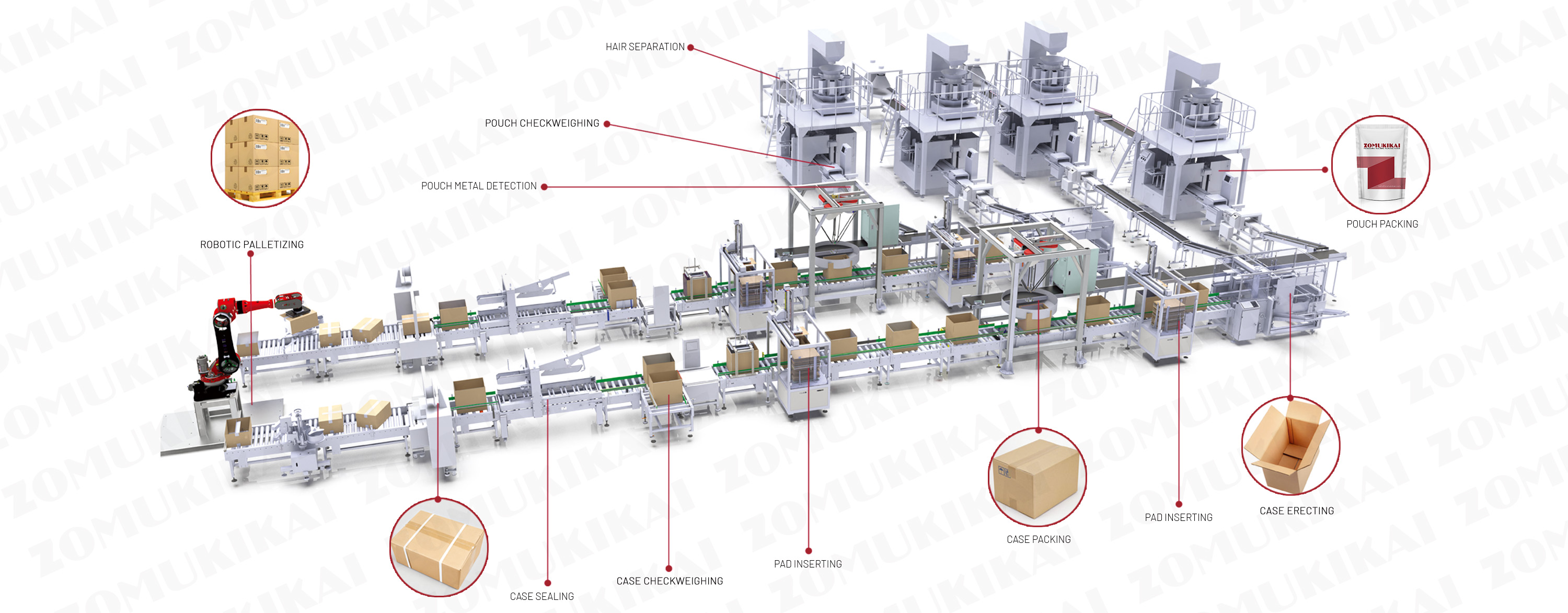
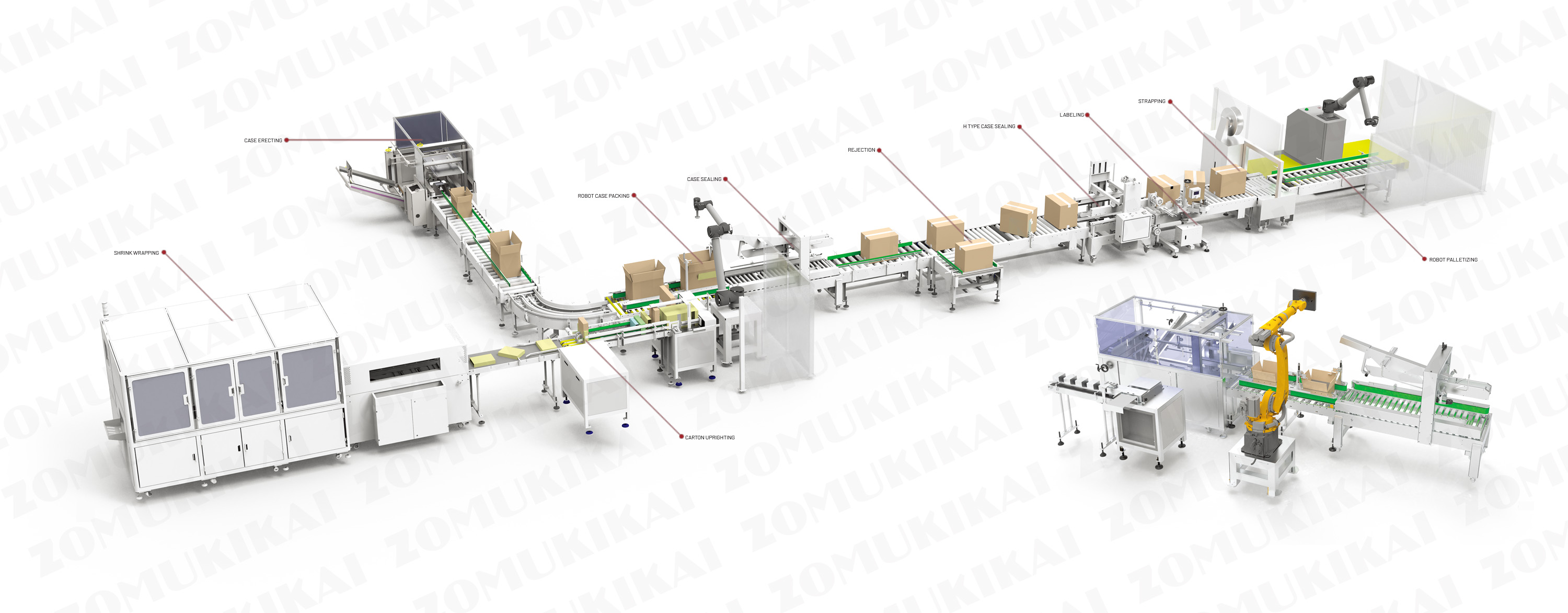
The machine sits at the end of a bagging or pouch line: product arrives from the upstream packaging machine, is grouped and pushed into an erected case, and leaves sealed for downstream handling. Three interface points are fixed at layout stage — the output rate of the upstream machine matched to the case packer's capacity, the conveyor height at the infeed, and the signal protocol between the two machines. Older manual feeding lines and equipment without a matching communication protocol need extra signal conversion, which is defined per project with our engineers.
Utilities and build
The ZC-SL550 draws 3.5 kW and 6 m³/hour of compressed air. The main structure is carbon steel with 304 stainless steel, and the surfaces that meet the product are specified to suit the application. Layout drawings and the machine configuration are prepared from your product, carton and plant-space information; a comparison of supply options is given in our overview of top 5 bag in box packaging machine china manufacturers.
Why Choose Us
Manual
- Unstable stacking of bagged products
- Low efficiency for soft products
- Inconsistent packing quality
- High labor dependency
Automatic Case Packing
- Controlled pre-stacking ensures stable grouping before loading
- Continuous automated stacking and packing process
- Side push system ensures consistent carton loading
- Reduced labor cost through automation