Case Packing Methods
Case packing methods are the ways filled cases are loaded, grouped and closed on an automatic line, and CASEPACKERPRO covers side load, top load, drop pack, pick-and-place, vision-guided delta robot case packing, and robotic and collaborative palletizing. Each method suits a different case style, product format and line layout, so the choice is made from the product, the case and the downstream palletizing step rather than from a single preferred design.
-
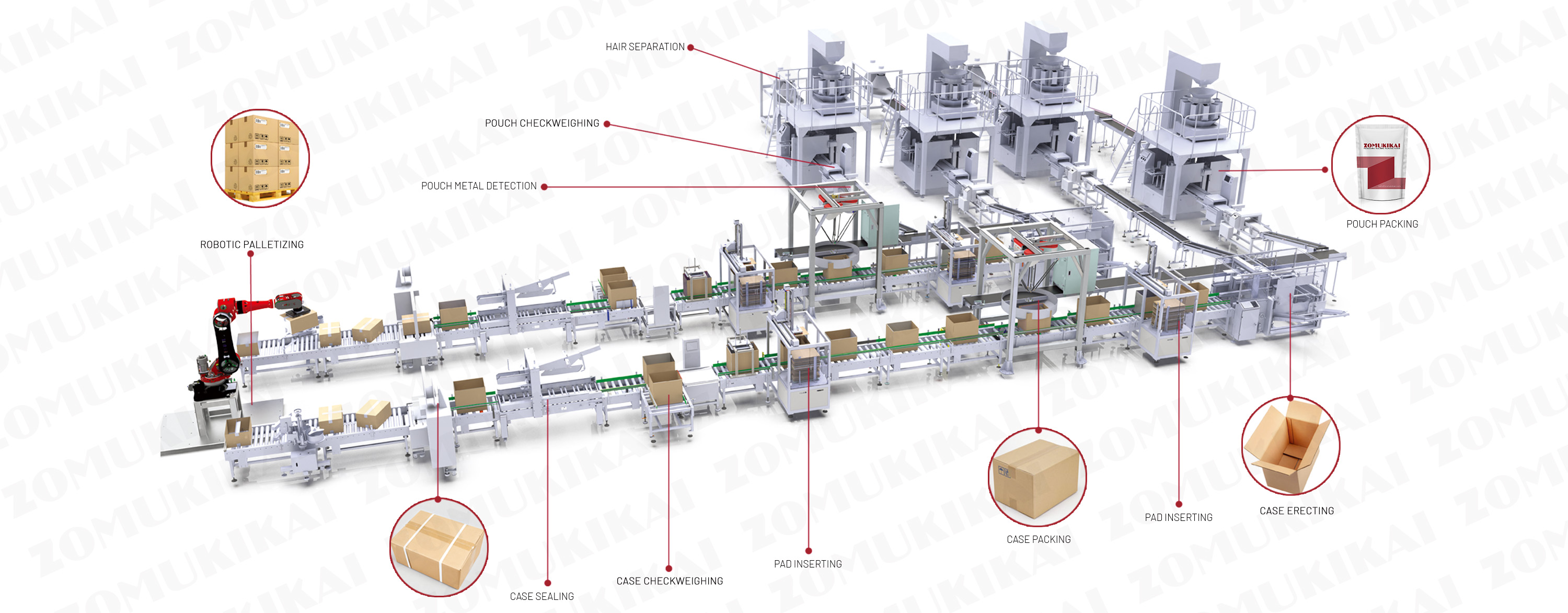
Stand Up Pouch Packing Line and Case Packing System
An integrated packing line for stand up pouches, combining pouch packing, case packing and palletizing for granular and nutraceutical products.
-
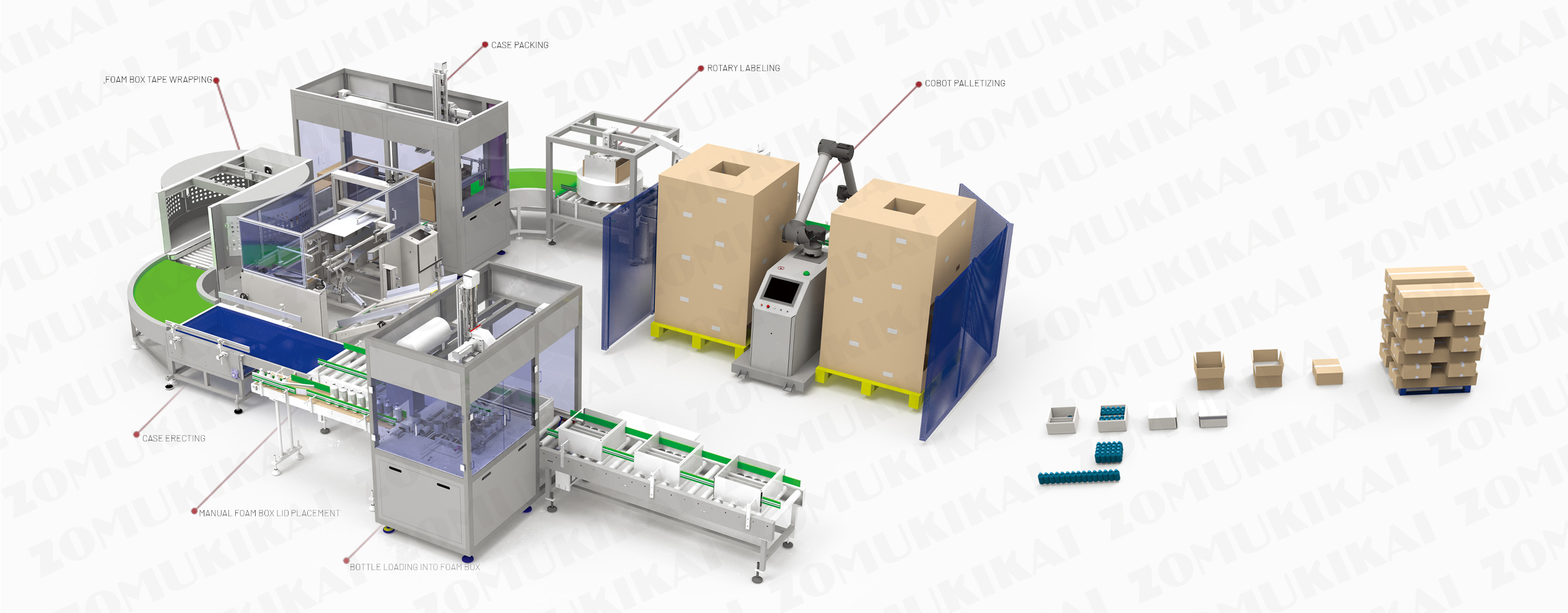
Automated Veterinary Medicine Packaging Line with Foam Box & Carton Integration
The veterinary medicine packaging line is an eight-station end-of-line system that takes filled plastic veterinary medicine bottles, lays them flat, inserts them into foam boxes, stretch wraps each box, packs the boxes into erected corrugated cartons, seals them and palletizes the finished cartons with a collaborative robot. It is configured for liquid veterinary medicine bottles, plastic veterinary vaccine bottles, powder veterinary medicine containers and temperature-sensitive animal health products that need thermal insulation and impact protection in transit.
-
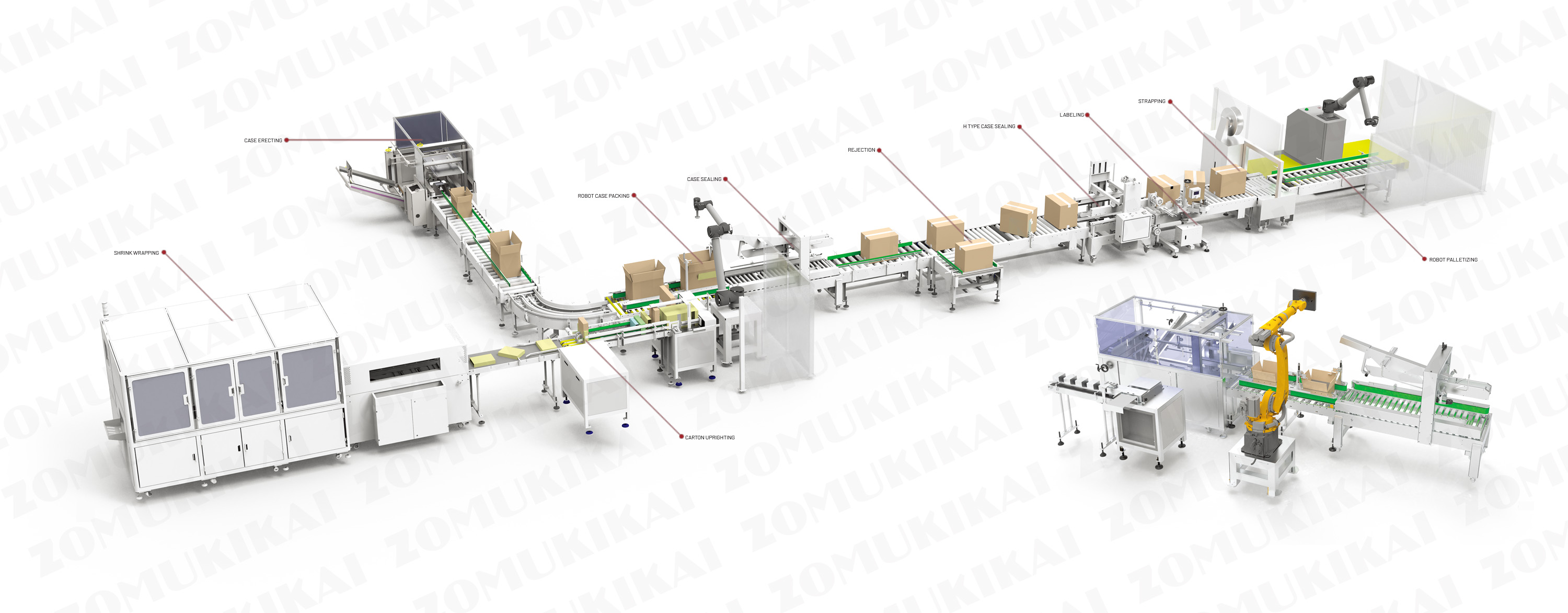
Automated Gift Box Case Packing & Robotic Palletizing System
A fully automated end-of-line solution for premium gift boxes and rigid presentation cartons, integrating shrink wrapping, case packing, sealing, strapping and robotic palletizing.
-
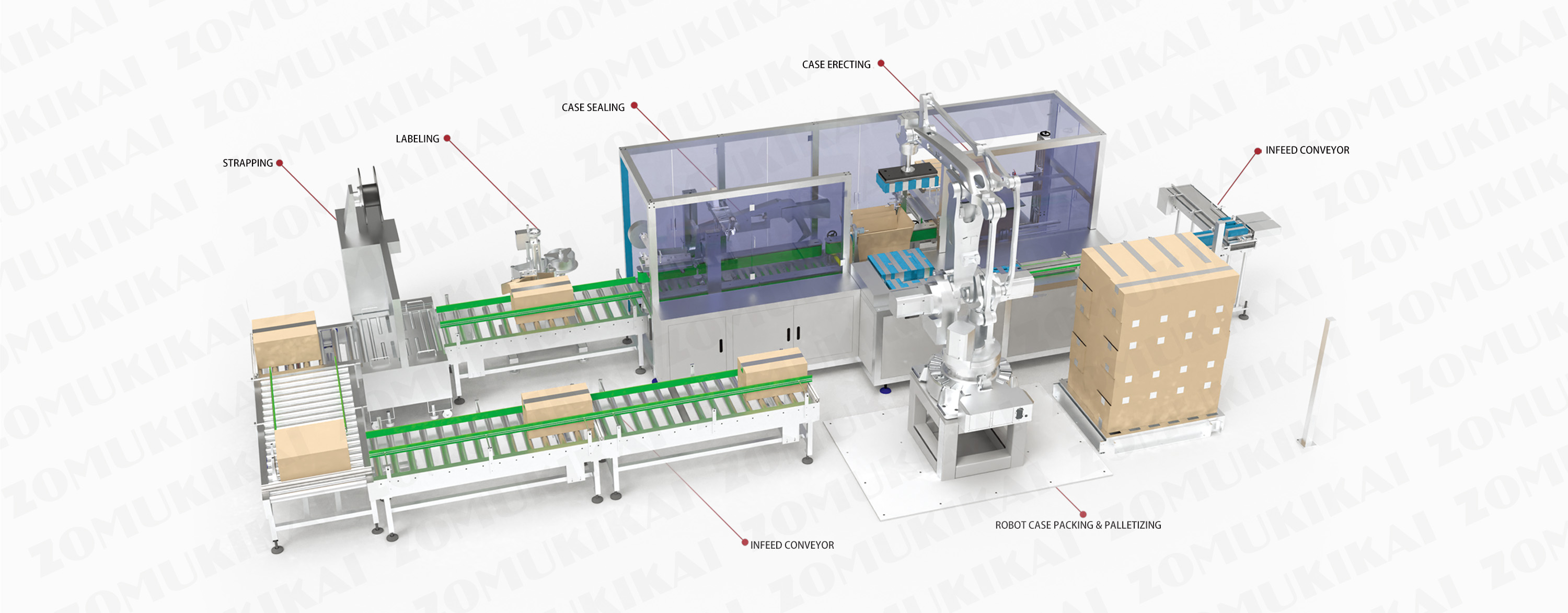
Pharmaceutical Robotic End-of-Line Packaging System
An integrated pharmaceutical end-of-line packaging solution combining blister packaging, cartoning, robotic case packing, case sealing, labeling, strapping and robotic palletizing. The system is designed for pharmaceutical secondary packaging applications with GMP-oriented construction, reliable automation and traceability integration capability.
What the method decides
The case packing method sets how the product enters the case, which case style can be used, and how the case is presented to the closing and palletizing stages. It also determines the floor space the line needs and how easily the line can be changed over between case sizes. On a packaging line, the case packer sits after the primary packaging machine and before palletizing, so its method has to match both ends.
Side load case packing
In side load case packing the case is presented on its side and the product is pushed in horizontally. This method is used where the product is stable when pushed as a group and where a tight pack inside the case is wanted. Because the case is open toward the loading direction, the case erecting and closing steps are arranged around that orientation.
Top load case packing
Top load case packing lowers the product into an upright case from above. It suits products that should not be pushed sideways and cases that are loaded while standing in their final orientation. The loading head and the case positioner are the parts that define how accurately the product group is placed.
Drop pack case packing
Drop pack case packing releases the product group into the case from above, relying on gravity for the final travel. It is a simpler loading motion than a full top load stroke, and the case and product need to tolerate that release. The method is chosen when the product format allows it and when the case is presented upright.
Pick-and-place case packing
Pick-and-place case packing picks individual products or small groups and places them into the case in a defined pattern. It is used when the pattern inside the case matters or when products cannot be handled as a single block. The number of picks and the pattern are defined per project with our engineers.
Vision-guided delta robot case packing
Vision-guided delta robot case packing uses a camera to locate products on the infeed and a delta robot to pick them and place them into the case. Because the robot follows the detected position, the method is used where products arrive in a variable position rather than in a fixed lane. The vision system and the robot working area are project-specific.
Robotic and collaborative palletizing
After case packing, cases are stacked by robotic and collaborative palletizing. A robotic palletizer handles the case stacking with a robot arm, while a collaborative palletizer is arranged so that people can work alongside it. Which of the two fits a line depends on the case weight, the pallet pattern and the working area around the palletizer.
Choosing between the methods
- Case style and how the case is presented to the loader
- Whether the product can be pushed, lowered, dropped or must be picked individually
- Whether the pattern inside the case is fixed or has to follow variable product positions
- How the packed cases are handed over to palletizing
Because these points interact, the method is confirmed together with the case and the pallet pattern rather than selected on its own.