How Automatic Case Packing Lines Work in Modern Packaging Production
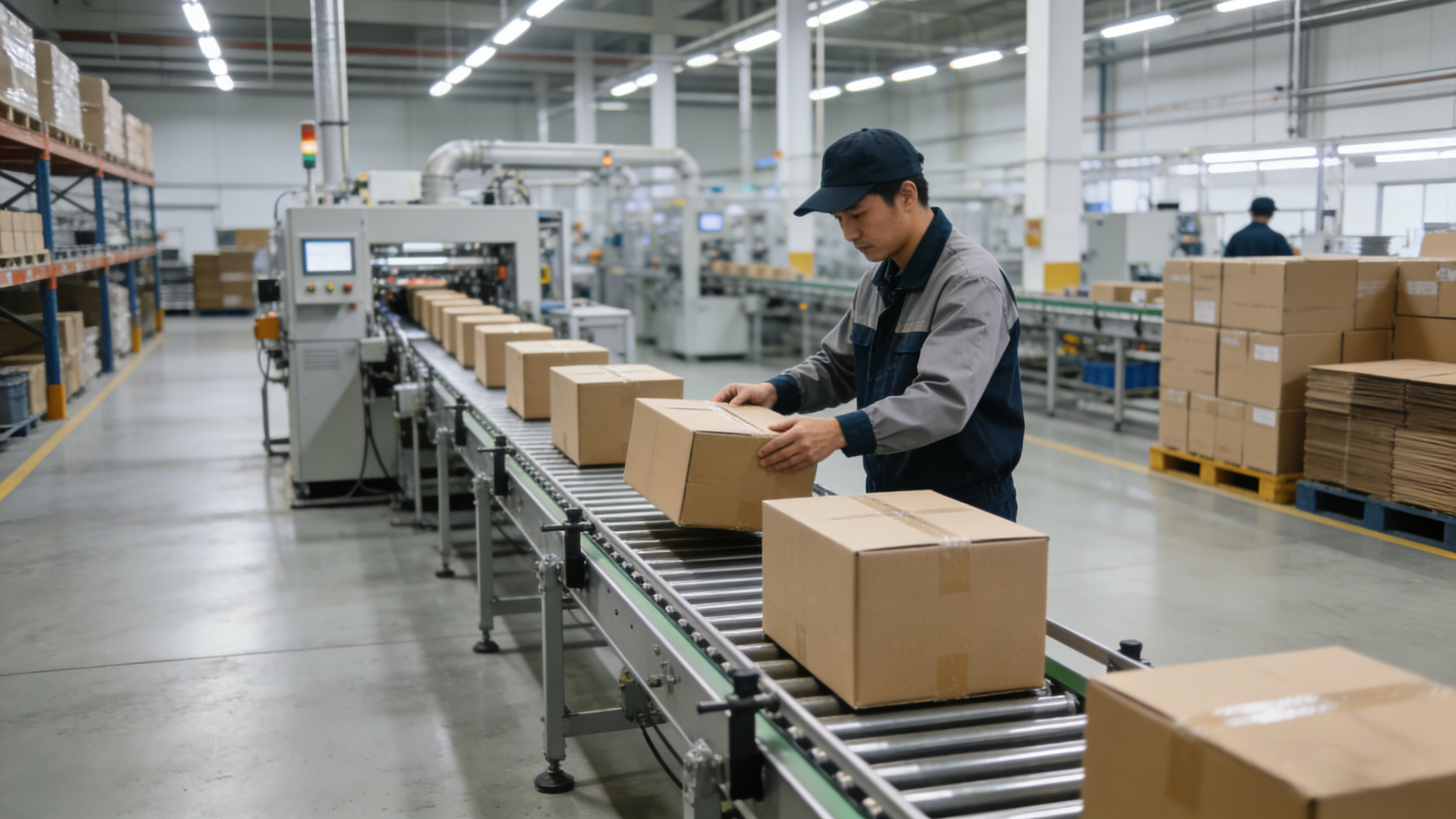
What an automatic case packing line does
An automatic case packing line sits at the end of the production flow. Upstream filling and capping equipment delivers finished containers; the case packer arranges them, loads them into cartons, and closes and seals the boxes. The line therefore completes product handling, transport and final packaging in one continuous sequence rather than as separate manual steps.
The automatic case packing machine is the core unit of this section. Around it, conveyors, carton forming and sealing modules and controls determine how smoothly the line runs.
How does an automatic case packing line work?
- Containers arrive from the filling machine and are arranged into the pattern required for the carton.
- Cartons are taken from a vertical magazine, opened, formed and their bottoms folded and sealed.
- The arranged containers are placed into the carton.
- The carton is closed and sealed, then conveyed to the next section.
Because cartons are stored vertically and fed continuously, the line does not need to stop for reloading during normal running. The pick, open, form, fold and bottom-seal steps are carried out as one process.
What is a fully automatic packaging line?
A fully automatic packaging line links filling, capping, case packing and conveying so that products move from one stage to the next without manual handling. In this structure the case packer is not isolated equipment: it receives containers directly from upstream machines and passes sealed cartons downstream. When the whole line is coordinated, production can run with minimal operator intervention.
Container types and line layout
Automatic case packing lines are built for bottles, cans, drums and similar containers. The layout is compact, and the line works alongside filling machines and other upstream equipment. Products are arranged, packed and conveyed onward automatically, which supports unmanned operation of the packing section.
For bottle-based production, the automatic bottle case packing machine is the unit that receives the filled bottles and carries out the carton loading and sealing steps.
Case packing machine integration
Integration is the part of the project that decides how well the line performs. The case packer must match the container size and arrival pattern of the upstream filler, and the carton size range must cover the boxes in use. Carton width and height are adjusted manually to suit different box dimensions, and the frame can be customized to the customer's requirements and site conditions. A lightweight structure with castors makes the unit easier to move and install during layout changes.
Benefits of automated case packing
- Lower labor demand in the end-of-line section, which matters during labor shortages.
- Higher and more consistent packing speed than manual cartoning.
- Neater, standardized cartons with less material waste.
- Stable operation with easy maintenance, supported by continuous carton feeding.
For manufacturers running bottles, cans or drums, these benefits accumulate over the life of the line: fewer operators at the end of the line, more uniform boxes, and a packing section that keeps pace with the filling equipment.
End of line packaging automation in practice
End of line packaging automation starts with a clear layout: where containers arrive, where empty cartons are stored, where sealed boxes leave the line, and how much floor space is available. Because the case packer can run independently or connect to a fully automatic packaging assembly line, the same unit can be introduced in stages as production grows.