Stand-Up Pouch Packing Line – Complete Automation Guide 2026
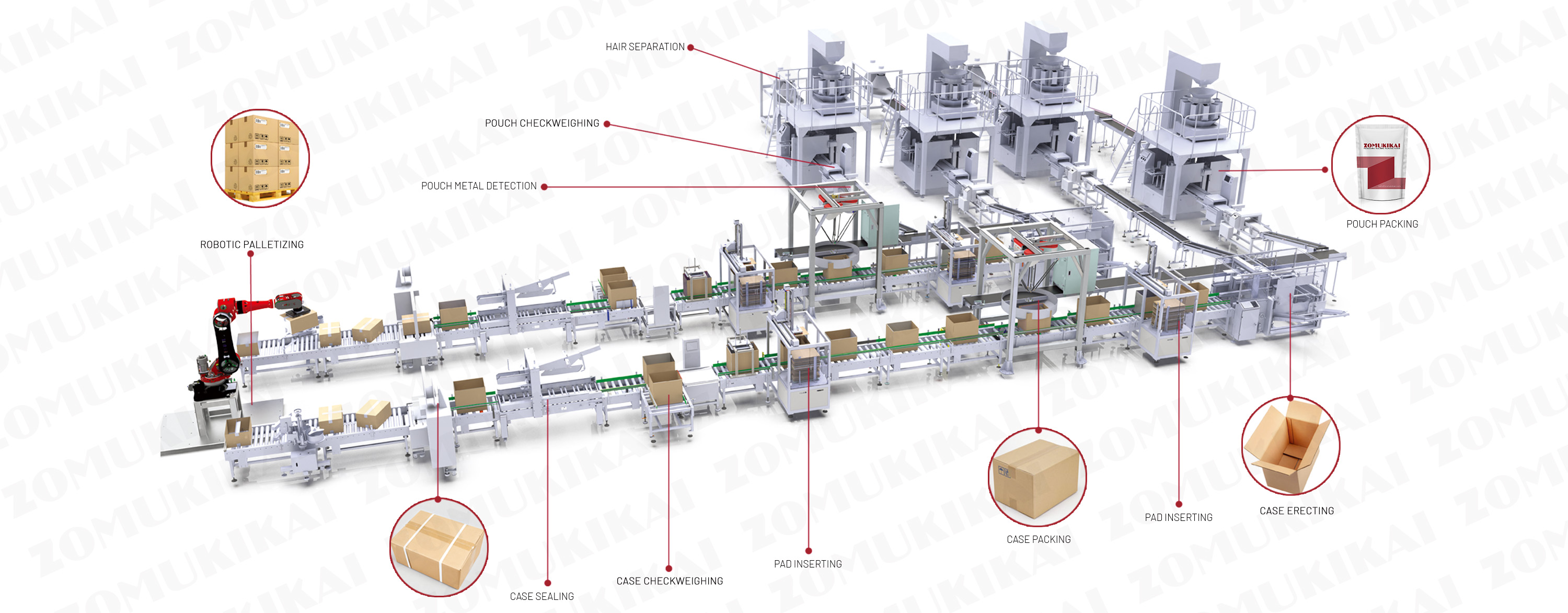
Why stand-up pouches behave differently on a packing line
A stand-up pouch stands on a shaped bottom gusset, so it holds its shape only while the base is flat and supported. On a moving conveyor the pouch can rock, tip or slide, and a filled pouch is heavier at the bottom than at the top. The film itself is flexible: a wrinkle near the seal area, a trapped product granule or an uneven jaw closing can weaken the seal. These characteristics, not the filling operation alone, decide how the rest of the line is designed.
Pouch styles a line can be planned around
- Doypack stand-up pouch – the classic bottom-gusset bag used for snacks, coffee and pet food.
- Zipper pouch – resealable, common for nuts, candy and dried fruit.
- Three-side seal bag – flat pouches for smaller portions and powders.
Pouch dimensions and style should be fixed early, because they determine the sealing jaws, the pouch magazine or film roll, and the gripping width used downstream.
Dosing method by product type
The dosing stage is chosen from how the product flows, not from the pouch:
- Nuts, coffee beans, candy, dried fruit, pet food – counted or weighed portions, where a multi-head weigher measures each portion before it drops into the pouch.
- Protein powder, flour, spices, detergents – powders and granules that flow and dust, so the dosing head and the seal area need protection from airborne fines.
- Sauces, laundry detergent refills, liquid soaps – liquids and pastes, where the fill nozzle, drip control and seal cleanliness matter more than weighing speed.
Fragile items, sticky items and powdery items each change the feeding angle, the drop height and the amount of settling time before sealing.
Where pouches fail between filling and cartoning
Most problems on a pouch line appear after sealing, not during it. Pouches wrinkle or jam on conventional conveyors, fall over when grouped, and lose seal integrity if they are dropped roughly into a carton. Lines address this with specialised gripping mechanisms that hold the pouch upright by its top edge, servo-driven jaw controls that keep sealing pressure even, and gentle top-load or drop-packer systems for secondary cartoning. The pouch packing production line page shows how these stages are arranged in a working line.
Planning a pouch packing line: what to decide first
- Product characteristics – fragile, sticky, powdery or liquid, and how much dust or drip the dosing stage produces.
- Pouch dimensions and style – Doypack, zipper pouch or three-side seal bag, and the width and height range you expect to run.
- Line speed target – the bags-per-minute figure your upstream production already sets.
- Factory layout – linear versus L-shaped arrangements, and the space available for case packing at the end.
- Secondary packing – whether finished pouches go into cartons by case packer or are grouped for palletizing.
Options and project-specific choices
Checkweighers, metal detectors, date coding, zipper opening and secondary case packing are configured per project with our engineers, because the right combination depends on the product, the pouch and the layout. Turnkey pouch packaging solutions are assembled from these modules rather than sold as a fixed catalogue line.
Setting up a new pouch packing line
Setting up a pouch packing line starts with a film and pouch trial: the seal jaws, the pouch support and the drop height are adjusted until the pouch stands square and the seal is clean. Only then is the line speed raised to the target. Changeover between pouch sizes is a matter of swapping format parts and re-setting the gripping width, so the number of formats you plan to run should be known before the line is built.