Top Load vs Side Load Case Packer – Comparison and Selection Guide
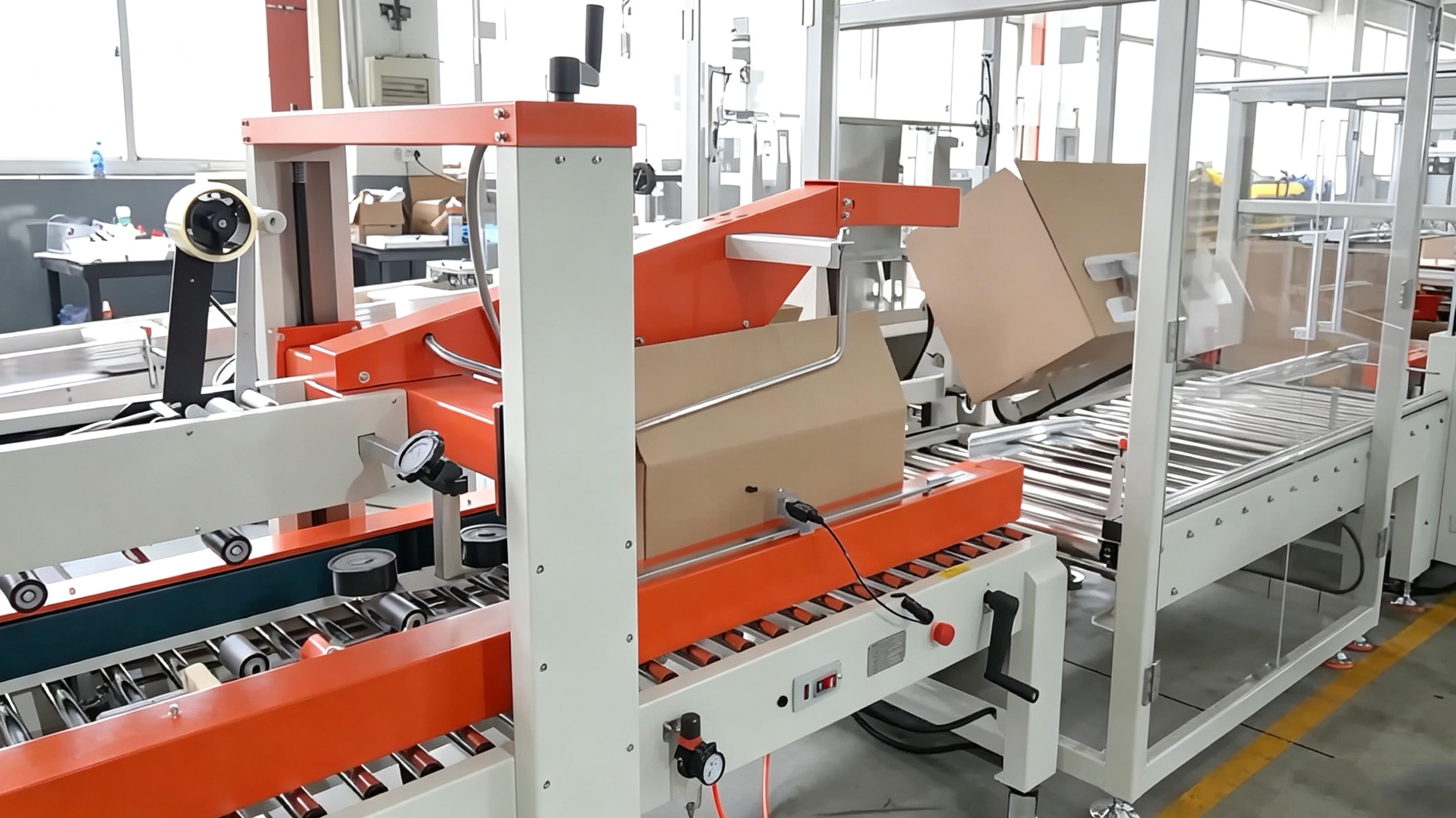
What a top load case packer does
A top load case packer forms or presents an open carton, groups the products, and lowers the group vertically into the carton from above. Because the product travels down into the case rather than being swept sideways, the method suits items that are soft, tall, unstable or easily marked. Pouches that have just been sealed, for example, can still be standing upright when they are placed.
The trade-off is cycle time: every case needs a pick-and-place or lowering motion, so a top load machine is normally chosen where gentle handling and product variety matter more than the highest possible case rate. The top load case packer page shows how this principle is built into a machine.
What a side load case packer does
A side load case packer accumulates products into a compact group and pushes that group horizontally through the open side of a carton. The carton is held on its side, filled, then closed and turned upright. The horizontal push is a short, repeatable stroke, which is why side load machines are associated with steady, high-volume runs of products that keep their shape under lateral pressure.
Side load packing needs a linear layout: infeed, grouping, carton magazine and discharge follow one another, so the line occupies more floor length than a top load arrangement.
Top load vs side load case packer difference at a glance
| Item | Top load case packer | Side load case packer |
|---|---|---|
| Loading direction | Product lowered vertically into an open carton | Product group pushed horizontally into a side-opening carton |
| Product handling | Gentle; suits soft, tall or unstable items | Suits products that stay stable under a horizontal push |
| Typical pace | Moderate, with room for mixed products | Continuous, for long standard runs |
| Changeover | Frequent format changes are practical | Best when the format stays fixed |
| Floor space | Compact, often shorter line | Linear layout, longer line |
Which is better for pouch products
For premade pouches, the answer depends on how the pouch behaves after filling. Stand-up pouches with a firm bottom gusset can be grouped and side loaded if the group is supported during the push. Pouches that are soft, partly filled or still warm from sealing are better lowered from above, where nothing presses against the pouch face. This is why the best case packer for pouch products is usually selected from a sample test rather than from a catalogue: the pouch, the fill level and the case pattern together decide the method.
When a gentle top load case packing machine is the right choice
- Fragile or surface-sensitive products that should not slide against each other
- Flexible pouches and bags that need vertical support during transfer
- Lines that change carton or product format regularly
- Workshops where line length is limited
When a high speed side load case packer is the right choice
- Long runs of one product and one carton format
- Products that hold their shape when pushed as a group
- Lines where a straight, linear layout fits the building
- Continuous operation where a short, repeatable stroke is preferred
How to run an industrial case packer selection guide
- Define the product: pouch or bottle dimensions, fill weight, how rigid the pack is after sealing.
- Define the case: carton dimensions and the packing pattern inside it.
- Define the line: upstream output, available floor length and the height of the existing conveyor.
- Test: send samples so the loading method can be checked with the real product.
- Confirm the layout drawing and configuration before the machine is built.
For a top load machine, the carton size range is part of the specification; the ZC-TL400, for example, is listed for corrugated cartons of (250–600) × (200–400) × (200–300) mm. Side load carton ranges are defined per project with our engineers, because the push stroke and the grouping section are built around the case pattern.
End of line packaging machine comparison: what else changes
The case packer is only one part of the end of line. Upstream, a rotary premade pouch machine fills and seals the pouches; the case packer then groups and cases them. If the pouch machine and the case packer are specified together, the transfer between them, the buffer and the case pattern can be planned as one line instead of two separate purchases. A custom case packer china factory build should always start from the pouch or bottle that comes out of the filling machine, not from the case packer alone.
Points to settle before ordering
- Which loading direction has been proven with your own product samples
- Carton size range and how often it will change
- Line layout and the space available for infeed and discharge conveyors
- Whether the case packer is bought as a stand-alone unit or as part of a complete line
Both methods can be built to the same carton quality; the decision is about product behaviour and line rhythm, not about one method being better in general.